As restorers and sellers of American classic cars and American cars in general, we love everything about these types of cars. While to provide our restoration services we need an intimate knowledge of how these machines run, most of us use elements of a car on a daily basis without any real understanding of how they came to fruition and the history behind the innovation. That’s why we think it appropriate to start up our engines and have a quick cruise through six car innovations that were born out of the USA.

These six American car inventions greatly benefited the automobile industry in America and some were first installed the American classic cars that we love to work on and drive today.
Conceived in the 1940s, cruise control was invented by a man named Ralph Teetor. It wasn’t until 1958, however, that it was installed in a production car – the 1958 Imperial.
A lot of European modern cars have lights that switch on automatically as dusk falls and dim when oncoming traffic is encountered. However, some now classic American cars were made with such technology decades ago. We may have some classic American cars for sale with self dipping headlights! Head to our For Sale page to enquire about the cars we have available right now – we will be more than happy to help.
Chrome bumpers featured heavily on American classic cars created in the 1960s and 1970s, such as the 1968 Plymouth Roadrunner we have recently restored. Side note – get in touch with us to learn of the classic American cars for sale in our garage today, some of which feature chrome bumpers!
While the aesthetics of such chrome bumpers are enjoyed by many and they suit the cars that were made at that time, they are difficult to repair when scraped and knocked. The first answer to that issue came from Pontiac, also in 1968, when General Motors fitted their popular GTO with a deformable bumper made from polyurethane.
There are certain innovations to come out of the USA that took performance to the next level and which meant that American cars for sale at the time were in high demand. Here, we look at three American innovations that are found in the overwhelming majority of European cars on sale today.
US General Motors supplied turbocharging a decade before companies such as Porsche, VW and Saab and the impact was just as huge then as it is in our classic American cars today. The Corva Monza’s flat six engine almost doubled in bhp, springing up to a respectable 160bhp, following the implementation of turbocharging – a drastic increase!
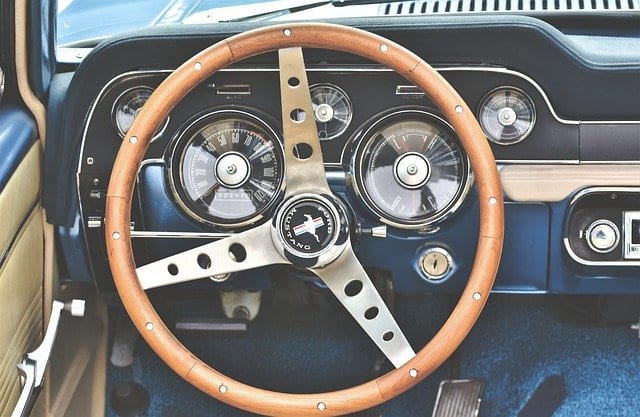
Prior to the 1950s companies, cars built in places such as Detroit had extremely lethargic steering ratios and enormous steering wheels. However, one of the three big companies – Ford, Chrysler, and General Motors – changed steering for the better. It was Chrysler who took most of the weight out of steering with the much needed introduction of power-assisted steering in 1951.
Again, it was Chrysler and more specifically their ground-breaking and incredible imperial rand of cars that first offered anti-lock brakes. Their Bendix system was introduced in 1971 and enabled one valve to control both brakes situated at the rear of the car and therefore had three in total. Seven years after this emergence, Mercedes Benz and Bosch came together to offer a system that could control all wheels independently.
We hope you’ve found this article interesting and that you’ve learnt about car innovations to come out of America! As restorers of classic American cars and a company that has American cars for sale, we have enjoyed bringing you this news piece. Contact us if you wish to talk through a restoration project – a gallery of recent projects can be found here – for your car or if you are interested in buying an American car.
If you’d like to learn more about car restoration, read our article on the top reasons why you should restore a classic American car.
To see one of our restoration projects in detail, have a look at our 1968 Road Runner car restoration project – from start to finish.